Will I Pass My DOT Physical? 12 Things That Determine Your Medical Card
This is the #1 question CDL drivers ask before walking in. The good news: most drivers can be certified. The key is knowing what the medical examiner is looking for — and bringing the right information if you have a medical condition.
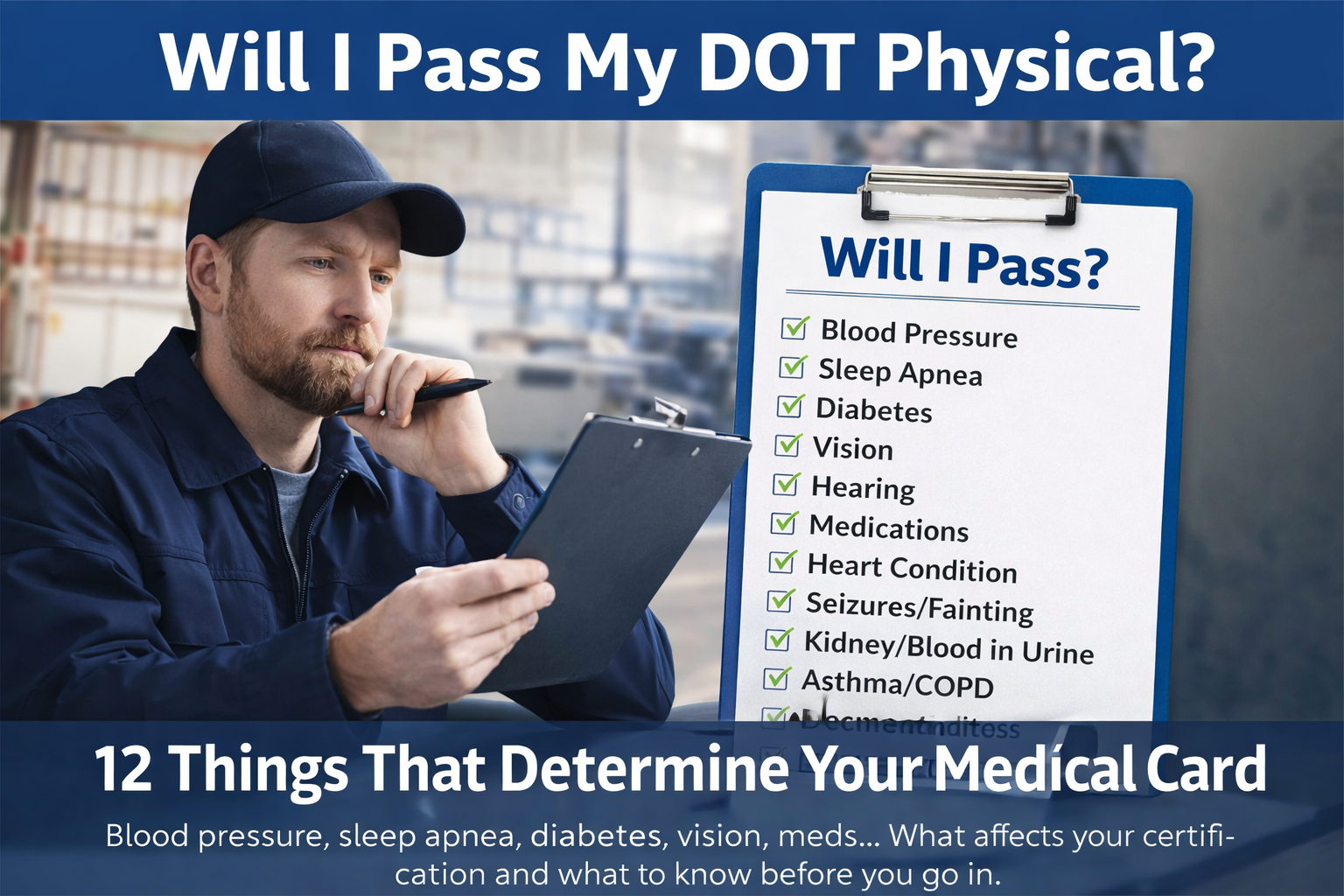
If you’re asking “Will I pass my DOT physical?” you’re not alone. Most drivers are worried about one thing: getting a medical card that keeps them working.
A DOT physical is designed to confirm that a driver can safely operate a commercial motor vehicle. Some conditions can lead to a shorter medical card (like 3 months or 1 year), and some may require additional documentation before the examiner can make a final decision.
Will I pass? Start with these 3 questions
1) Can you see and hear well enough?
Vision and hearing must meet DOT standards, with or without corrective devices (glasses/hearing aids).
2) Is your blood pressure controlled?
Blood pressure is one of the most common reasons a card is shortened. (Tip: avoid caffeine right before your exam.)
3) Are any conditions uncontrolled or unsafe right now?
Sleep apnea without compliance, uncontrolled diabetes symptoms, severe dizziness, or medication side effects can trigger follow-up.
What most drivers need
Not perfection — just control, stability, and the right documentation.
12 common things that can affect whether you pass
1) Blood pressure
High blood pressure can shorten your card even if you feel fine. If you’ve had high readings before, bring your medication list and consider checking BP a few days before your exam. Learn more: How caffeine affects DOT blood pressure.
2) Sleep apnea & CPAP compliance
Sleep apnea doesn’t automatically disqualify you — but if you use a CPAP, you may be asked for a compliance report. See: Sleep apnea & DOT physical requirements.
3) Diabetes or high blood sugar
Diabetes can be certifiable when it’s controlled and monitored. If glucose shows up in urine, it often means follow-up may be needed. Read: Sugar in urine during a DOT physical: what happens next.
4) Vision problems
If you wear glasses or contacts, bring them. If you’re worried about failing vision, it may be a simple fix (updated prescription). Related: What happens if I fail a DOT eye exam?
5) Hearing concerns
Many drivers pass with a hearing aid. If you have one, bring it and make sure it’s working properly on exam day.
6) Medications that cause drowsiness or impairment
Some prescriptions and OTC medications can affect alertness. The examiner is looking for safe driving ability, not judging treatment. Bring a current medication list (name, dose, and how often you take it).
7) Heart conditions (stents, AFib, history of cardiac events)
Heart conditions often require documentation showing stability and follow-up care. If you have a cardiologist, bring recent notes if available. Related: AFib and DOT physical certification.
8) Neurological history (seizures, fainting, severe dizziness)
If you’ve had a seizure history, syncope, or unexplained fainting, expect follow-up. Stable history with long symptom-free periods is handled differently than recent episodes.
9) Kidney issues or abnormal urinalysis (protein, blood)
DOT urinalysis is a medical screen. Abnormal findings may require your primary care provider to evaluate and provide records. (This is separate from DOT drug testing.)
10) Respiratory conditions (asthma/COPD)
Many drivers pass with an inhaler. The examiner wants to confirm that symptoms are controlled and don’t interfere with safe driving.
11) Mental health and safety-related symptoms
Conditions like anxiety, depression, or ADHD are not automatic disqualifiers. The focus is whether treatment is stable and whether any medication side effects could impair driving.
12) Missing documentation
A lot of “failures” happen because the driver didn’t bring needed paperwork (CPAP report, clearance letter, medication list, recent labs). If you’re unsure what to bring, call ahead — we’ll tell you what helps.
- Valid ID
- Glasses/contacts (and hearing aid if used)
- List of current medications (name + dose)
- Any recent specialist notes if you have a known condition (cardiology, sleep, diabetes)
- CPAP compliance report (if applicable)
What if I don’t pass the same day?
Not passing on the spot doesn’t always mean you’re disqualified. Often, the exam is pending until you provide: lab results (A1C), a provider clearance letter, or a CPAP compliance report.
Quick FAQs
Is the urine test in the DOT physical a drug test?
No. The DOT physical urinalysis is a medical screen (glucose, protein, blood, hydration). DOT drug testing is a separate process.
Can I still pass if my blood pressure is high today?
Many drivers can be certified with follow-up, lifestyle improvements, or treatment — sometimes with a shorter card initially.
What’s the most common reason drivers get a 3-month card?
Blood pressure and follow-up documentation needs are common reasons for a shorter certification period.
Need a DOT physical in Orlando?
If you’re nervous about passing, call us first — we’ll tell you what to bring and what helps your situation. HealthRoute provides DOT physicals in Orlando with walk-in and appointment options.
Call: 407-859-1880 • Location: 4985 Hoffner Ave, Suite 1, Orlando, FL 32812