Why You Got a 3-Month, 1-Year, or 2-Year DOT Medical Card
A DOT medical card can be issued for 2 years, 1 year, or even 3 months. That time length is not random—it usually depends on your health history, recent changes, and whether monitoring or follow-up is needed. Here’s what the different card lengths typically mean and how to avoid delays next time.
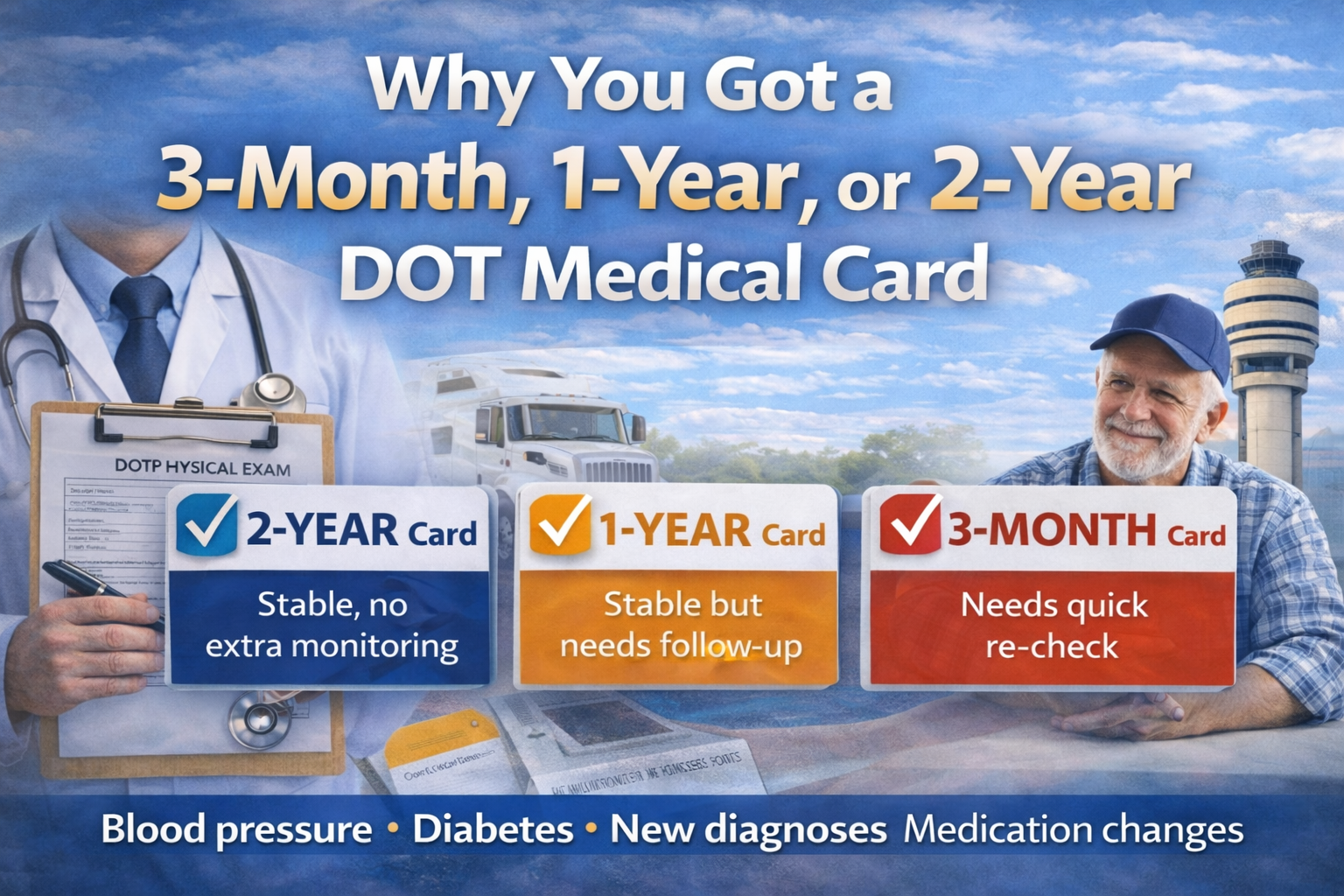
Quick answer: What the card length usually means
✅ 2-Year Card
Most common when you’re stable, well-controlled, and no extra monitoring is needed.
✅ 1-Year Card
Often given when a condition is stable but needs regular follow-up or documentation each year.
✅ 3-Month Card
Typically used when a condition needs quick re-check (commonly blood pressure) before full length can be issued.
Why you got a 2-year DOT medical card
A 2-year medical card is usually issued when you meet DOT standards and your health risks are considered low. This typically means you have no disqualifying conditions and no medical issue requiring short-term monitoring.
Common reasons drivers get a 2-year card
- Blood pressure is in a safe range (and stable over time)
- No concerning symptoms or diagnosis
- No new major diagnoses requiring follow-up
Why you got a 1-year DOT medical card
A 1-year card is commonly issued when you can safely drive, but the examiner wants yearly check-ins because of a condition that needs ongoing monitoring or documentation.
Common reasons for a 1-year card
- High blood pressure that’s controlled with medication but requires routine follow-up
- Diabetes (especially if on medication or if the examiner wants updated labs/notes annually)
- Sleep apnea with CPAP use (often requires compliance documentation)
- Heart history (like AFib) that’s stable but needs periodic cardiology follow-up
- New medications where the examiner wants to ensure stability over time
What to bring next year (so you don’t get delayed)
- Updated medication list (include dosage)
- Any specialist clearance letter if you have heart conditions
- Recent CPAP compliance report (if applicable)
- Recent lab results or follow-up notes if you’re managing diabetes
Why you got a 3-month DOT medical card
A 3-month card is most commonly used when something needs to be corrected or re-checked soon before the examiner can extend your certification. This does not always mean “failed”—it often means “follow up quickly.”
Most common reason: Blood pressure
If your blood pressure is above the preferred range during the exam, an examiner may issue a short-term card so you can: (1) follow up with your provider, (2) improve control, and (3) return with better readings.
Other reasons you may receive a short card
- New diagnosis or recent medical event (the examiner wants stability documented)
- Recent medication change with possible side effects
- Missing paperwork (specialist note, clearance, CPAP report, etc.)
- Symptoms that require evaluation
How to increase your chances of getting a full-length card
- Bring a medication list every time (name + dose + frequency).
- If you have a specialist (cardiology, sleep, endocrinology), bring a recent visit note or clearance.
- Avoid last-minute triggers that can inflate readings (like heavy caffeine right before the exam).
- If you got a short card before, schedule follow-up early—don’t wait until your card is about to expire.
Need a DOT physical in Orlando?
HealthRoute helps drivers understand what to bring and what to expect—so you can avoid delays and keep moving.
DOT Physicals • Book / Walk-In Info • Call 407-859-1880