What is on a DOT Medical Card?
Many CDL drivers carry their DOT medical card without really knowing what each section means. But the information printed on the certificate can be very important. It can tell you when your certification expires, whether you are qualified for interstate driving, and whether you must drive with corrective lenses, a hearing aid, or other restrictions.
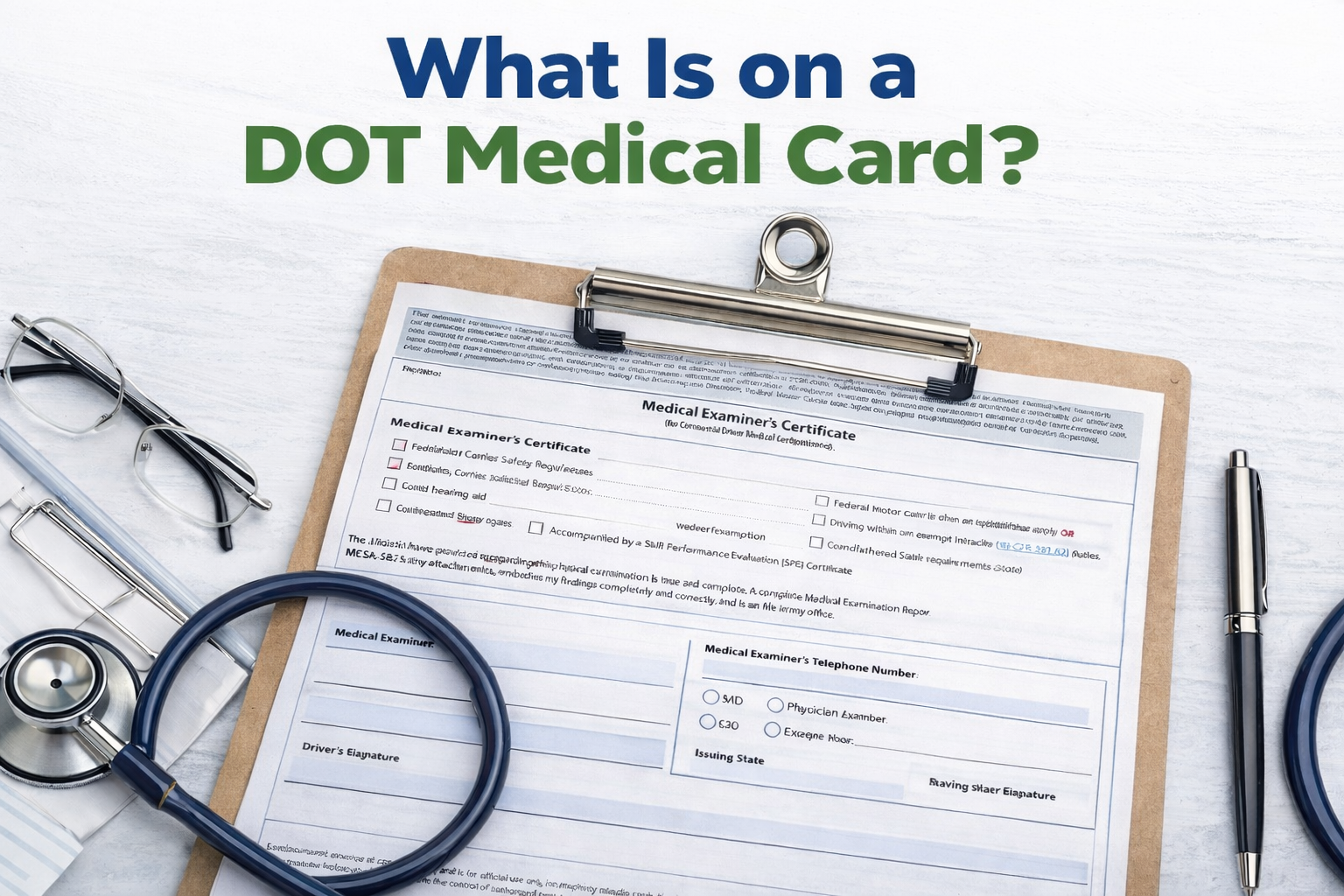
What is the DOT medical card?
The DOT medical card, also called the Medical Examiner’s Certificate, is the document that shows a certified medical examiner has determined whether a driver is medically qualified to operate a commercial motor vehicle.
For many CDL drivers, this card is more than just a piece of paper. It contains practical information that can affect everyday driving, renewals, compliance, and questions that come up between one physical and the next.
Why drivers should actually read it
A lot of drivers only look at the card long enough to see whether they passed. But the certificate can also tell you:
- When your certification expires
- Whether you are qualified for interstate operation
- Whether you have a corrective lenses, hearing aid, or other restriction
- Who performed the exam and how to contact that office
The most useful information on the medical card
| Section on the card | Why it matters to the driver |
|---|---|
| Driver’s name | Make sure your name is correct and matches your CDL or CLP as closely as possible. Errors can create confusion later. |
| Certification expiration date | This tells you when your current certification ends. Drivers should know this date and plan ahead before it expires. |
| Interstate vs. state-only qualification | The qualification section helps show whether the driver is certified under the federal standard or under a state-only exception/restriction. |
| Restriction boxes | This section may show whether you must wear corrective lenses, use a hearing aid, have an SPE certificate, or have another restriction noted. |
| Medical examiner’s telephone number | This can be very useful if you later have questions about a new medication, recent surgery, diagnosis, paperwork, or what to bring to your next DOT physical. |
| Medical examiner’s name | Helpful if you or an employer ever need to know exactly who completed the exam. |
| National Registry Number | This identifies the certified medical examiner who issued the certificate and can be useful for record verification. |
| Date certificate signed | This helps confirm when the certificate was issued. |
| Driver’s signature | The card should be properly completed and signed where required. |
| Driver’s license number and issuing state | Drivers should confirm this information is accurate since it helps identify the correct person. |
Certification expiration date
One of the most important parts of the card is the Medical Examiner’s Certificate Expiration Date. This tells the driver when the current certification ends.
Drivers should not wait until the last minute. If your card expires, that can affect your ability to continue driving legally in a CDL position depending on your state and employer requirements.
Interstate or state-only qualification
Near the top left section of the certificate, the form shows which qualification standard applies. This can be important because it tells the driver whether they were found qualified under the normal federal interstate standard or under a qualifying exception or state-only situation.
For many CDL drivers, the key point is whether they are certified for interstate driving or whether a state-only limitation applies.
Federal interstate qualification
This generally means the driver was found qualified under the federal standard for commercial driving.
State-only or exception-based qualification
This may indicate a state waiver, exemption, or another limited qualification status that the driver should understand clearly.
Restrictions matter more than many drivers realize
Another very important part of the medical card is the restriction section. This area may show whether the driver must:
- Wear corrective lenses
- Use a hearing aid
- Carry or comply with an SPE certificate
- Follow another listed restriction or exemption
If one of these boxes is checked, the driver should understand that it is not just a note. It is part of the certification information and may affect how the driver must operate.
- If you normally drive with glasses, is corrective lenses marked correctly?
- If a hearing aid requirement applies, is it listed correctly?
- If an SPE or waiver applies, is that reflected correctly?
- Do you understand whether any restriction affects how you must drive or what documents you should keep?
Why the medical examiner’s phone number is useful
The medical examiner’s telephone number may seem like a minor detail, but it can be very helpful later.
For example, drivers may need to call the examiner’s office if they have questions about:
- A new medication
- A recent surgery or hospitalization
- A new diagnosis such as sleep apnea, high blood pressure, diabetes, or a heart issue
- What documents to bring to the next DOT physical
- A question about what is written on the certificate
The examiner’s name and National Registry number
The certificate also lists the medical examiner’s name and National Registry Number. Most drivers will not use this information every day, but it can still matter.
It may be helpful if:
- Your employer has a question about who performed the exam
- You need to reference the examiner later
- There is ever a record question and the issuing examiner must be identified clearly
Your personal information should be correct
Drivers should also review their identifying information on the card. That includes:
- First and last name
- Driver’s license number
- Issuing state or province
- Address if listed
Small mistakes can turn into bigger headaches later, especially when a driver changes names, renews a license, submits paperwork to an employer, or has to show proof of certification.
Review the card before leaving the office
One of the best habits a CDL driver can develop is to review the certificate before walking out the door. That only takes a minute, but it can help catch obvious errors early.
- Is your name correct?
- Is the expiration date correct?
- Does the interstate or qualification section look right?
- Are any restrictions marked correctly?
- Is the examiner’s office information present?
- Is the certificate completed and signed where needed?
Bottom line
FAQ
What is the most important thing to check on a DOT medical card?
The expiration date is one of the most important items because it tells you when your current medical certification ends. Drivers should also check their name and any restrictions.
Why would I need the medical examiner’s phone number later?
It may help if you have questions about a new medication, surgery, diagnosis, paperwork, or what records to bring to your next DOT physical.
What does it mean if corrective lenses is checked?
It means you must comply with that requirement while driving. Drivers should pay close attention to any restriction box checked on the certificate.
What if my name or license number is wrong on the card?
You should contact the examiner’s office as soon as possible so the issue can be reviewed and corrected if needed.
Should I keep the card even if my state receives electronic information?
Drivers should keep their certificate records and follow their employer and state requirements. Keeping a copy available is often a good idea.
Need help with your next DOT physical in Orlando?
HealthRoute helps CDL drivers understand their certification, restrictions, and what to bring for follow-up visits. If you have questions about a recent medication, surgery, or medical issue before your next DOT physical, our office may be able to help you understand what documentation could be needed.
Call: 407-859-1880 • Location: 4985 Hoffner Ave, Suite 1, Orlando, FL 32812