Sleep Apnea & DOT Physical Requirements: CPAP Compliance and What Drivers Need
Can you pass a DOT physical with sleep apnea? In most cases, yes—if the condition is treated and you can show safe, effective control. Here’s what drivers should know about CPAP compliance reports, documentation, and certification timelines.
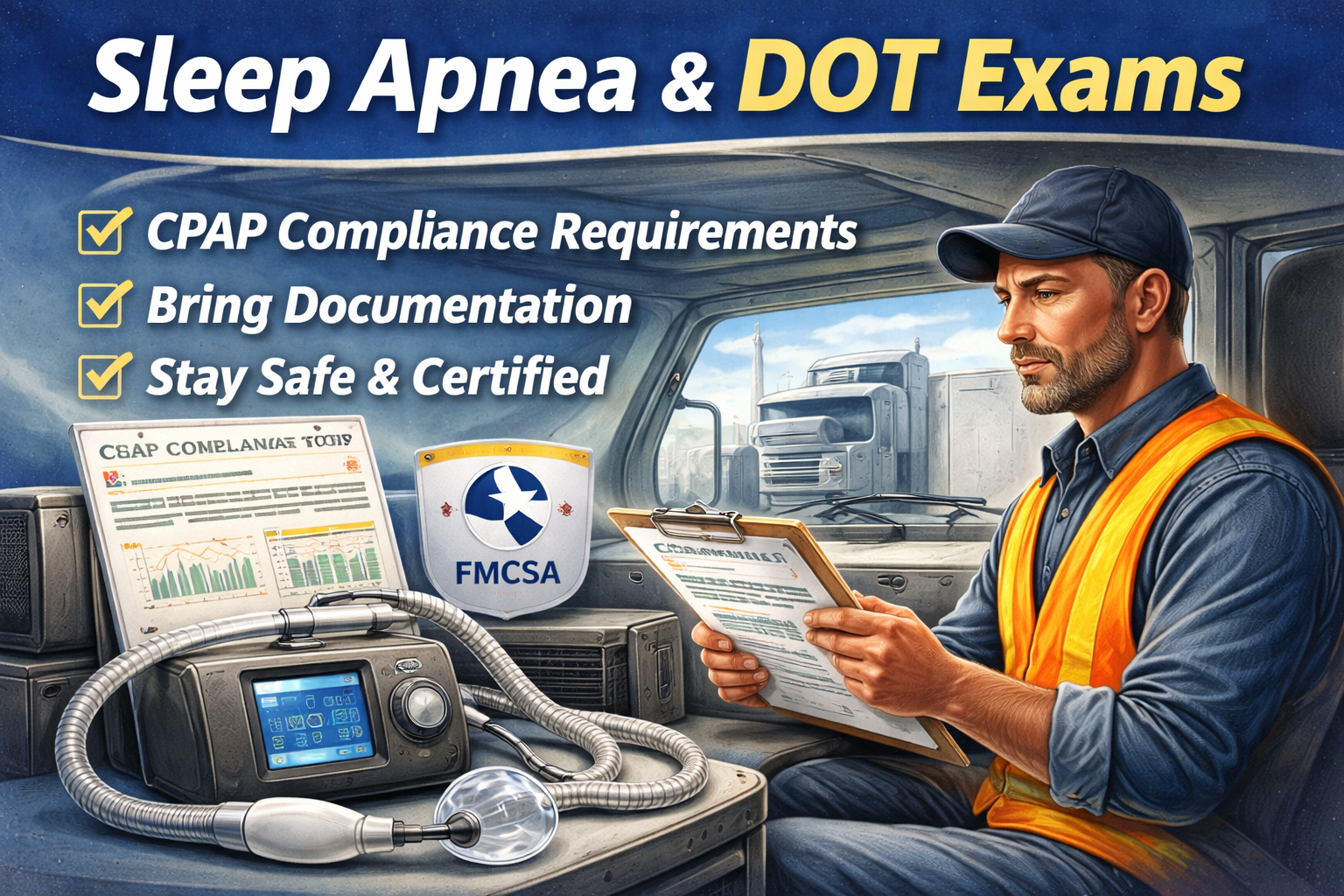
Sleep apnea is one of the most common medical conditions that comes up during a DOT physical—especially for drivers who feel tired during the day, snore loudly, or have other risk factors. The main concern is safety: untreated sleep apnea can cause daytime sleepiness and slower reaction time, which increases crash risk.
Do DOT Rules “Automatically Disqualify” Sleep Apnea?
There isn’t a single “automatic disqualification” rule that says a diagnosis alone fails you. Medical examiners evaluate whether the condition is likely to interfere with safe driving. In practical terms:
- Untreated or uncontrolled sleep apnea may result in a shorter certification, a pending status, or the need for follow-up documentation.
- Treated and well-controlled sleep apnea (with evidence of effective treatment) often allows certification.
What the Medical Examiner Is Looking For
During a DOT exam, the examiner’s job is to determine if you are medically qualified to safely operate a commercial motor vehicle. For sleep apnea, the key questions are:
Is it treated?
If you have OSA, are you using CPAP/BiPAP or another effective treatment plan?
Is it effective?
Do you have fewer symptoms—less daytime sleepiness, better alertness, improved sleep?
Is it documented?
Can you provide a CPAP compliance report or provider documentation when asked?
Is it safe for driving?
Any ongoing fatigue, near-miss incidents, or issues that suggest impaired alertness?
CPAP Compliance for DOT Physicals: What Counts?
Many sleep providers and compliance reports use a common standard: at least 4 hours per night on at least 70% of nights. Some examiners prefer more usage, and some employers have their own policies. The best move is to bring your current report and be ready to show it.
What a CPAP Report Usually Shows
- Compliance percentage (nights used)
- Average hours used per night
- Dates covered (important!)
- Leak data and therapy effectiveness (varies by device)
What to Bring to Your DOT Physical if You Have Sleep Apnea
- Your CPAP compliance report (most recent, with clear dates)
- Your sleep specialist’s notes if you have them (especially after a new diagnosis)
- A list of medications (and how you take them)
- Your current medical card (if renewing)
What If You Don’t Have a CPAP Report Yet?
This happens a lot—drivers are diagnosed, start CPAP, and then need a DOT physical before they’ve collected enough compliance data. Depending on your situation, the examiner may:
- Issue a shorter certification and request you return with compliance documentation, or
- Place the exam in a pending status until documentation is provided, or
- Recommend follow-up with your provider before full certification.
Can You Pass a DOT Physical with Sleep Apnea?
In many cases, yes—drivers can be certified when sleep apnea is treated and they can demonstrate safe, effective control. The fastest path is to arrive prepared with the right documentation and be honest about symptoms.
Common Driver Questions
“Will sleep apnea always limit me to a 1-year card?”
Yes, drivers with OSA receive a 1-year certification so the examiner can confirm ongoing treatment compliance. Certification length can vary based on your health history and documentation.
“What if I stopped using CPAP?”
If CPAP was prescribed and you stopped, talk to your provider. Untreated OSA can create safety risk and may affect certification. If you changed treatment (weight loss, dental device, surgery), bring documentation showing the condition is effectively controlled.
“What if I’m tired during the day?”
Daytime sleepiness matters. Tell your provider and consider follow-up. For DOT purposes, persistent fatigue can be a safety concern. Treating the underlying cause is the goal—not “pushing through it.”
Next Steps
If you have sleep apnea (or you think you might), the best plan is:
- Follow your provider’s treatment plan
- Get your CPAP compliance report (with dates)
- Bring documentation to your DOT exam
- Don’t ignore symptoms like daytime fatigue
Need help? Call HealthRoute at 407-859-1880 or visit us in Orlando. You can also review our DOT physical page here: DOT Physicals at HealthRoute.
This article is for informational purposes and does not replace FMCSA regulations, employer policies, or medical advice. Always follow your medical provider’s guidance and the medical examiner’s instructions.