Medication Safety for CDL Drivers: Reading Labels, Avoiding Interactions, and Why You Should Never Share
If you drive a commercial vehicle, medication choices can affect alertness, reaction time, and safety. Here’s a practical guide to reading prescription labels, spotting interaction risks, and protecting yourself on the road.
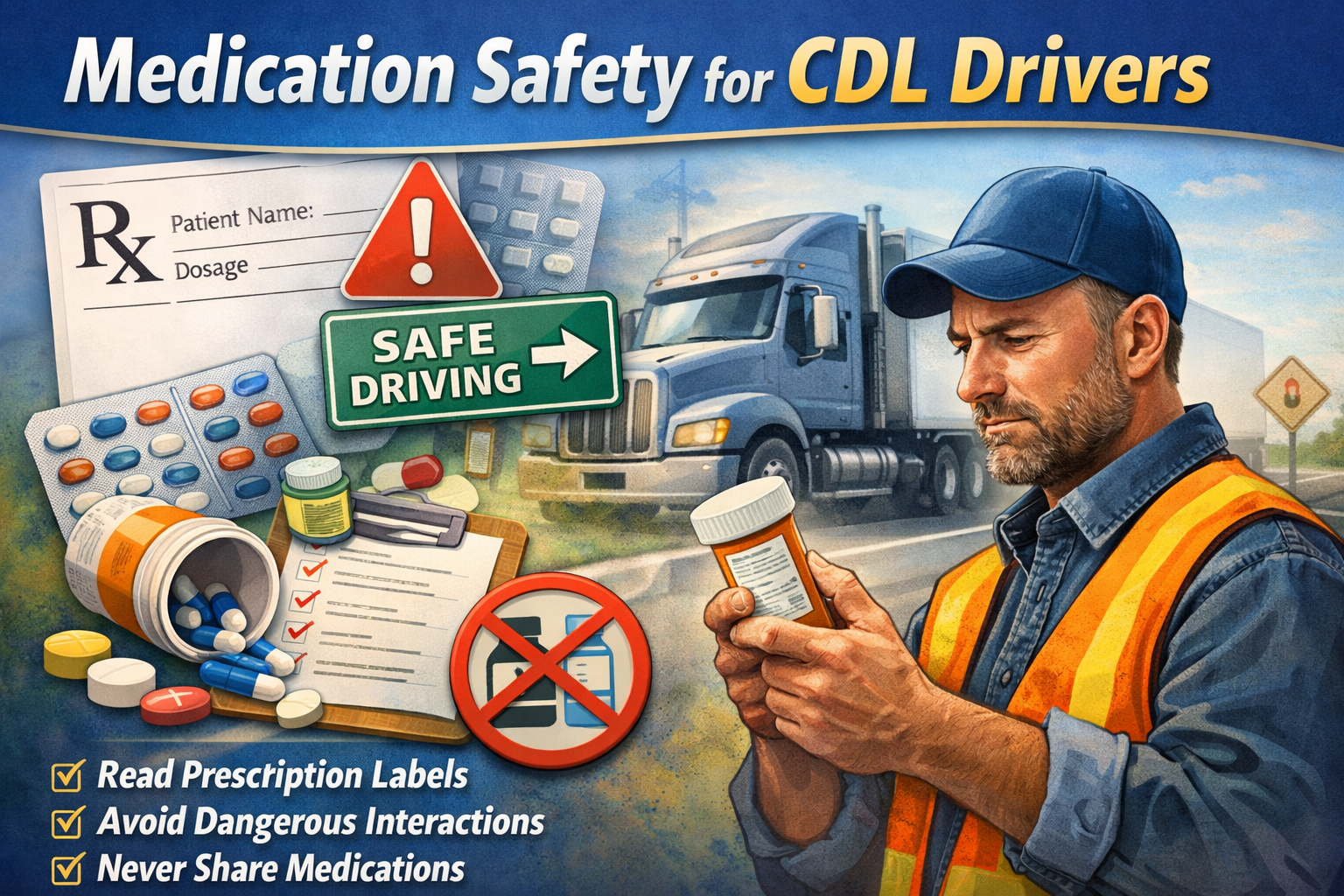
Many drivers pick up a prescription and head straight back to work without fully understanding what the medication does—or how it may affect driving. The truth is simple: if a medication makes you drowsy, dizzy, slowed down, or foggy, it can create real safety risks in a commercial vehicle.
Start With the “Six Questions” Before You Take Any Prescription
When a doctor writes a prescription, you should leave the visit with clear answers. Ask these six questions every time:
- Why am I taking this medication? What condition is it treating, and what should improve?
- How much should I take? Confirm the exact dose.
- When should I take it? Morning vs. night, with or without meals, and how often.
- How should I take it? Swallow whole vs. split, take with water, avoid alcohol, etc.
- What if I miss a dose? Should you take it later or skip and resume the schedule?
- What side effects should I watch for? Especially drowsiness, dizziness, blurred vision, or confusion.
As a CDL driver, add one more: “Will this affect my ability to drive safely?” Some medications can impair focus, coordination, or stamina—even if you “feel fine.”
How to Read a Prescription Label Like a Pro
Prescription labels are packed with important details. Before you take the first dose, verify these items:
- Your name and address (make sure it’s your prescription, not someone else’s)
- Prescription number (useful for refills and pharmacy questions)
- Medication name (brand vs. generic can look different—confirm what you received)
- Directions (how much, when, and how often)
- Prescribing provider (who wrote it)
- Warning labels (e.g., “may cause drowsiness,” “avoid alcohol,” “do not operate machinery”)
Medication Interactions: Prescription, OTC, and Herbal Can All Mix
Interactions can happen when you take two or more medications on the same day—whether they’re prescribed, over-the-counter, or “natural” supplements. Interactions may:
- Increase side effects (like drowsiness or dizziness)
- Reduce effectiveness (meaning the medication doesn’t work as intended)
- Worsen existing conditions (such as blood pressure, heart rate, or blood sugar control)
Food and Drink Can Interact Too
Some medications react with foods and drinks. A common example is grapefruit products, which can interfere with certain medications and potentially contribute to stronger side effects (like flushing, headaches, dizziness, or changes in heart rate or blood pressure). If your label mentions foods to avoid—take it seriously.
How to Evaluate Interaction Risk
You don’t need to be a pharmacist to reduce risk. Do these two things:
- Read labels carefully. Warning stickers often call out major interactions and foods to avoid.
- Talk to your provider. Ask directly about driving safety and whether timing, dose changes, or alternative options exist.
If you’re an employer managing a DOT program, you should also remind drivers to report medication concerns through the appropriate channel and keep documentation consistent with company policy.
“Don’t Share Medications” (Even OTC): Why It’s a Serious Risk
It can feel harmless to give a friend “the same thing that helped you,” but sharing medications can be dangerous. Even common over-the-counter medications can cause problems for someone else.
1) Side effects and interactions aren’t predictable
A medication that doesn’t make you sleepy might make another driver drowsy within minutes. Different body chemistry, liver metabolism, existing conditions, and other medications can change the reaction completely.
2) Symptoms can look similar—but the cause can be different
Your friend’s headache, pain, or cold symptoms might not be the same problem you had. Sharing meds can delay proper medical evaluation and lead to worsening conditions.
3) Some medications can be habit-forming or unsafe for driving
Medications with narcotic components (and some non-narcotic prescriptions) can impair alertness, focus, and coordination. That’s a direct safety issue in a commercial vehicle—especially during long routes and tight schedules.
4) Sharing controlled substances can be illegal
Controlled medications are prescribed to a specific person, in a specific dose, for a specific condition. Sharing them can create legal risk on top of the health and safety risk.
Practical Checklist for Drivers
- Ask the six questions (and add: “Is it safe for driving?”)
- Double-check your label: name, medication, instructions, warnings
- List everything you take (Rx + OTC + supplements) for your provider
- Watch for drowsiness, dizziness, confusion, blurred vision, delayed reaction
- Never share medications—ever
Need help? Call HealthRoute at 407-859-1880. We help drivers stay ready for work with DOT physicals, documentation guidance, and compliance support for employers and owner-operators.
Note: This article is based on general safety guidance commonly shared for commercial drivers and medication use. For medical decisions, always follow your prescribing provider and pharmacist.