Things We See in the Office: How to Make Your DOT Physical Go Smoothly
At HealthRoute, we see thousands of commercial drivers every year, and many delays or repeat visits happen for simple, avoidable reasons. A little preparation can save time, reduce stress, and help your DOT physical go much more smoothly.
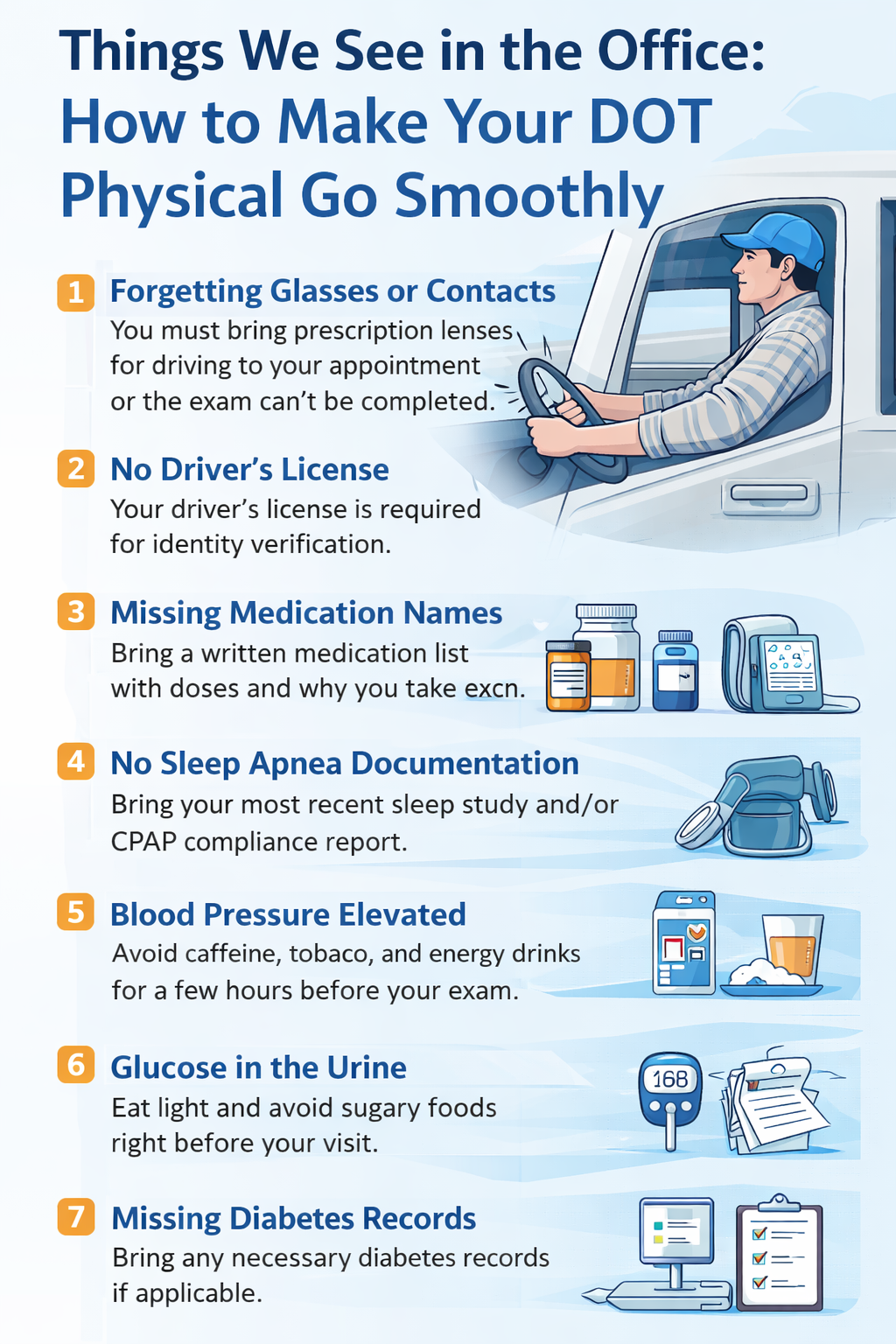
Why preparation matters
A DOT physical is not just a routine office visit. The medical examiner has to verify your identity, review your medical history, check your vision and hearing, review medications, and determine whether you meet the medical standards to drive safely. When a driver shows up prepared, the visit usually goes faster and with fewer surprises.
What helps
Bringing your ID, glasses, medication list, and any needed medical records can make the exam smoother and reduce the chance of repeat visits.
What causes delays
Missing documents, high blood pressure from stimulants, forgotten medical details, and incomplete sleep apnea or diabetes paperwork are some of the most common issues we see.
1. Forgetting glasses or contacts
If you wear prescription lenses for driving, bring them to your appointment. Without them, you may not meet the vision requirement, and the exam may not be able to be completed that day.
The same goes for hearing aids if you use them. If you rely on a device to meet hearing standards for safe driving, bring it with you.
2. No driver’s license
It sounds simple, but it happens all the time. Your driver’s license is needed for identity verification and to complete your examination paperwork correctly.
Before leaving home, make sure you have your license in your wallet and not sitting on the counter or in another vehicle.
3. Missing medication names
Many drivers take daily medications but do not always remember the names, doses, or why they take them. Your examiner needs this information to evaluate certification safely and accurately.
- A written medication list
- Medication bottles, if needed
- Dose and frequency, if you know them
- The reason you take the medication
4. No sleep apnea or sleep study documentation
Drivers with diagnosed sleep apnea should bring their most recent sleep study and, when applicable, their CPAP compliance report. Missing documentation is one of the most common reasons a driver may need follow-up before certification is finalized.
If you know you have sleep apnea, it is better to bring the records the first time rather than hope they will not be needed.
5. Blood pressure elevated from caffeine, nicotine, or rushing in
Coffee, soda, energy drinks, nicotine, and even the stress of running late can temporarily raise blood pressure. Sometimes that increase is enough to affect the length of your medical card.
6. Glucose in the urine after a heavy meal
A large carbohydrate-heavy meal or sugary drink right before your exam can sometimes lead to glucose showing in the urine sample. That may require additional review or testing.
Eating lighter before the visit and avoiding a large sugary meal right before arrival can help prevent unnecessary questions or delays.
7. Not bringing diabetes records when they are needed
If you have diabetes, especially if you are insulin-treated or your condition is closely monitored, it helps to bring any recent records your examiner may need. Depending on your situation, that may include recent blood sugar logs, medication details, or an A1C result if you have it available.
Bringing clear information up front often prevents follow-up calls and repeat visits.
8. Recent specialist care with no documentation
If you recently saw a cardiologist, neurologist, sleep specialist, psychiatrist, or another provider for a condition that may affect safe driving, bring the note or clearance letter if you already have it.
The examiner may need that information to understand whether your condition is stable and whether you are safe to drive.
A simple DOT physical checklist
- Driver’s license
- Glasses or contacts if you wear them for driving
- Hearing aids, if applicable
- Medication list
- Sleep study or CPAP compliance report, if applicable
- Recent specialist note or clearance letter, if applicable
- Diabetes-related records, if applicable
What drivers can do the morning of the exam
| Do this | Why it helps |
|---|---|
| Bring your ID and required documents | Reduces the chance of delays or needing a second trip |
| Eat light before your visit | May help avoid unnecessary urine findings after a heavy sugary meal |
| Avoid energy drinks and stimulants | Can help keep blood pressure from being temporarily elevated |
| Arrive a little early | Helps you settle down and reduces stress-related blood pressure spikes |
| Bring a medication list | Makes the medical history review faster and more accurate |
A smooth DOT physical starts with preparation
Most delays are preventable with just a little planning. Bringing the right items and thinking ahead can make your exam faster, easier, and less stressful.
At HealthRoute, we want drivers to leave with answers, not frustration. If you are not sure what to bring, call ahead and ask. A quick question before your visit can save you a repeat trip later.
FAQ
What should I bring to a DOT physical?
Bring your driver’s license, glasses or contacts if you wear them for driving, a medication list, and any medical documentation related to sleep apnea, diabetes, or specialist care.
Can coffee affect a DOT physical?
It can. Caffeine may temporarily raise blood pressure, which can matter for some drivers. If your blood pressure tends to run high, avoiding caffeine before the exam may help.
Why would a DOT physical be delayed?
Common reasons include missing ID, forgotten glasses, missing medication information, lack of sleep apnea records, and temporary issues like elevated blood pressure.
Do I need to know my medications for a DOT exam?
Yes. The examiner needs to know what medications you take and, if possible, the dose and reason for taking them.
Should I bring my sleep apnea paperwork?
Yes. If you have diagnosed sleep apnea, bringing your sleep study and CPAP compliance records can help avoid delays.
Need a DOT physical in Orlando?
HealthRoute provides walk-in DOT physicals in Orlando. If you have questions about what to bring, call us before your visit and we will help you prepare.
Call: 407-859-1880 • Location: 4985 Hoffner Ave, Suite 1, Orlando, FL 32812