High Blood Pressure & DOT Physical Requirements (Stages, Limits, Certification)
High blood pressure is one of the most common reasons CDL drivers receive a shorter medical card (3 months or 1 year). The good news: many drivers still pass — the key is understanding the DOT blood pressure stages, what numbers trigger follow-up, and how to prepare for a smooth exam.
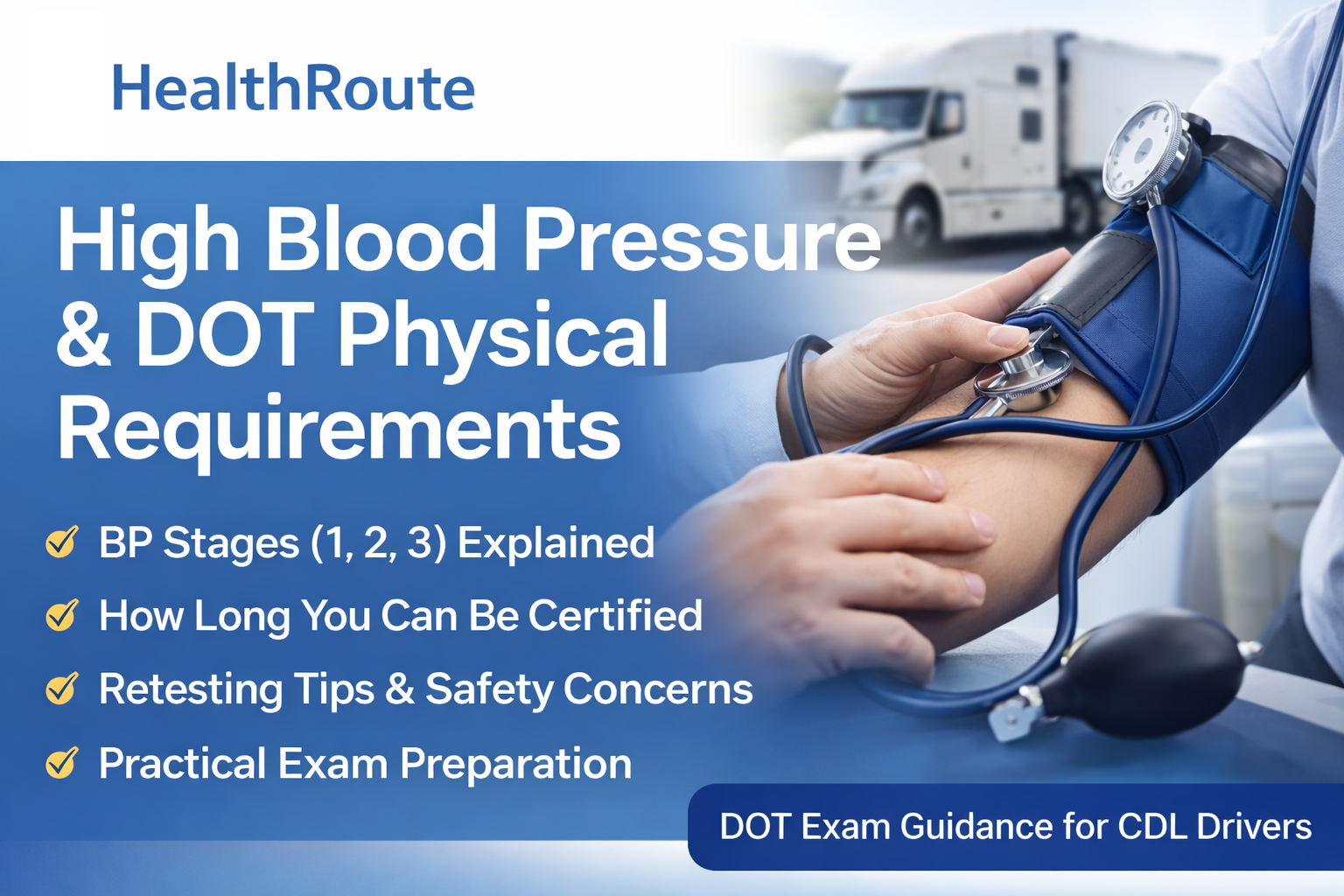
Can you pass a DOT physical with high blood pressure?
Yes — many drivers are medically certified with hypertension. The DOT medical examiner is focused on one question: Is your blood pressure controlled well enough to safely operate a commercial vehicle?
High blood pressure can reduce your certification length because uncontrolled hypertension increases the risk of sudden events (like chest pain, stroke, or other complications) that could affect safe driving.
DOT blood pressure stages and certification length
DOT medical guidance commonly groups blood pressure into stages. The stage can impact whether you receive a 2-year card, a shorter card, or a “pending” status while you get it under control.
| DOT BP Category | Blood Pressure Reading (Systolic/Diastolic) | What It May Mean for Your Medical Card |
|---|---|---|
| At or under 140/90 | ≤ 140 / 90 | Many drivers may qualify for the maximum certification length (if all other exam items are acceptable and you do not have a current diagnosis of high blood pressure). |
| Stage 1 | 140–159 / 90–99 | Often results in a shorter certification (commonly up to 1 year) and follow-up at the next exam. |
| Stage 2 | 160–179 / 100–109 | May result in a shorter card (commonly up to 3 months) so you can get treatment and return with improved readings. |
| Stage 3 | ≥ 180 / 110 | Typically too high for certification at that visit. You may need treatment and a follow-up reading before a medical card can be issued. |
What happens if your blood pressure is high at the DOT exam?
If your reading is elevated, the examiner may:
- Ask you to sit quietly for 5–10 minutes and recheck
- Confirm your medication list and whether you took your dose
- Ask about symptoms (headaches, chest pain, dizziness, shortness of breath)
- Issue a shorter certification to allow time for treatment and follow-up
- Delay certification if the reading is very high or safety concerns are present
Things that can temporarily raise BP
Caffeine, nicotine, energy drinks, poor sleep, pain, dehydration, rushing to the appointment, stress/anxiety, and even talking during the reading.
Things that help lower BP before a recheck
Sit quietly with feet flat on the floor, breathe slowly, avoid talking, rest your arm at heart level, and allow a few minutes before rechecking.
How to prepare for a DOT physical if you have high blood pressure
These simple steps can help you avoid a “borderline” reading that leads to a shorter card.
- Take your blood pressure medications as prescribed (unless your clinician told you otherwise)
- Avoid energy drinks and heavy caffeine before your exam
- Don’t smoke or vape right before the appointment
- Arrive early so you’re not rushed
- Bring a complete medication list (name + dose)
- If you have recent BP logs or a clinician note, bring it
Will blood pressure medication disqualify you?
Usually no. Many drivers take blood pressure medication and are medically certified. What matters is whether your blood pressure is adequately controlled and whether you have side effects that could affect safe driving (like dizziness, fainting, or severe fatigue).
Can you retest blood pressure the same day?
Often, yes — if your examiner believes the first reading may be affected by anxiety or temporary factors. A quick “cool down” period and proper positioning can change the reading. If your blood pressure is extremely high, it may be safer to postpone certification and seek medical care.
Related: Why you got a 3-month, 1-year, or 2-year DOT medical card
When high blood pressure becomes a bigger DOT concern
Hypertension is often manageable — but it becomes more serious when it’s tied to complications or symptoms that raise safety concerns. The examiner may request additional information if there is concern for:
- Chest pain, shortness of breath, fainting, or dizziness
- History of stroke, heart attack, heart failure, or uncontrolled diabetes
- Evidence of organ complications (kidney disease, vision issues, etc.)
FAQ
What blood pressure is too high to pass a DOT physical?
Readings at or above 180/110 are typically too high for certification at that visit. Treatment and a follow-up reading are often required before a medical card can be issued.
Can I still pass if my blood pressure is 150/95?
Many drivers with readings in this range are certified, but it may result in a shorter card depending on your overall health history and the examiner’s judgment.
Does DOT average multiple blood pressure readings?
The examiner will document the reading(s) taken during the exam. If the first reading is high, you may be allowed to rest and recheck, but the final documented reading is what matters.
Can coffee or energy drinks affect my DOT blood pressure reading?
Yes. Caffeine and stimulants can raise blood pressure temporarily. If you run borderline, skipping caffeine for several hours before the exam can help.
Should I skip my blood pressure meds before the DOT exam?
No — take medication exactly as prescribed unless your clinician told you otherwise. Skipping a dose can cause your reading to be higher during the DOT exam.
Need a DOT physical in Orlando?
HealthRoute provides walk-in DOT physicals in Orlando. If blood pressure is a concern, bring your medication list and arrive a little early so you can relax before your reading.
Call: 407-859-1880 • Location: 4985 Hoffner Ave, Suite 1, Orlando, FL 32812