Hernia & DOT Physical Requirements (Can You Pass?)
Hernias are common in working drivers — especially jobs that involve lifting, climbing, and long hours. The big question we hear is: “Can I pass a DOT physical with a hernia?” In many cases, yes — but it depends on symptoms, stability, and safety risk.
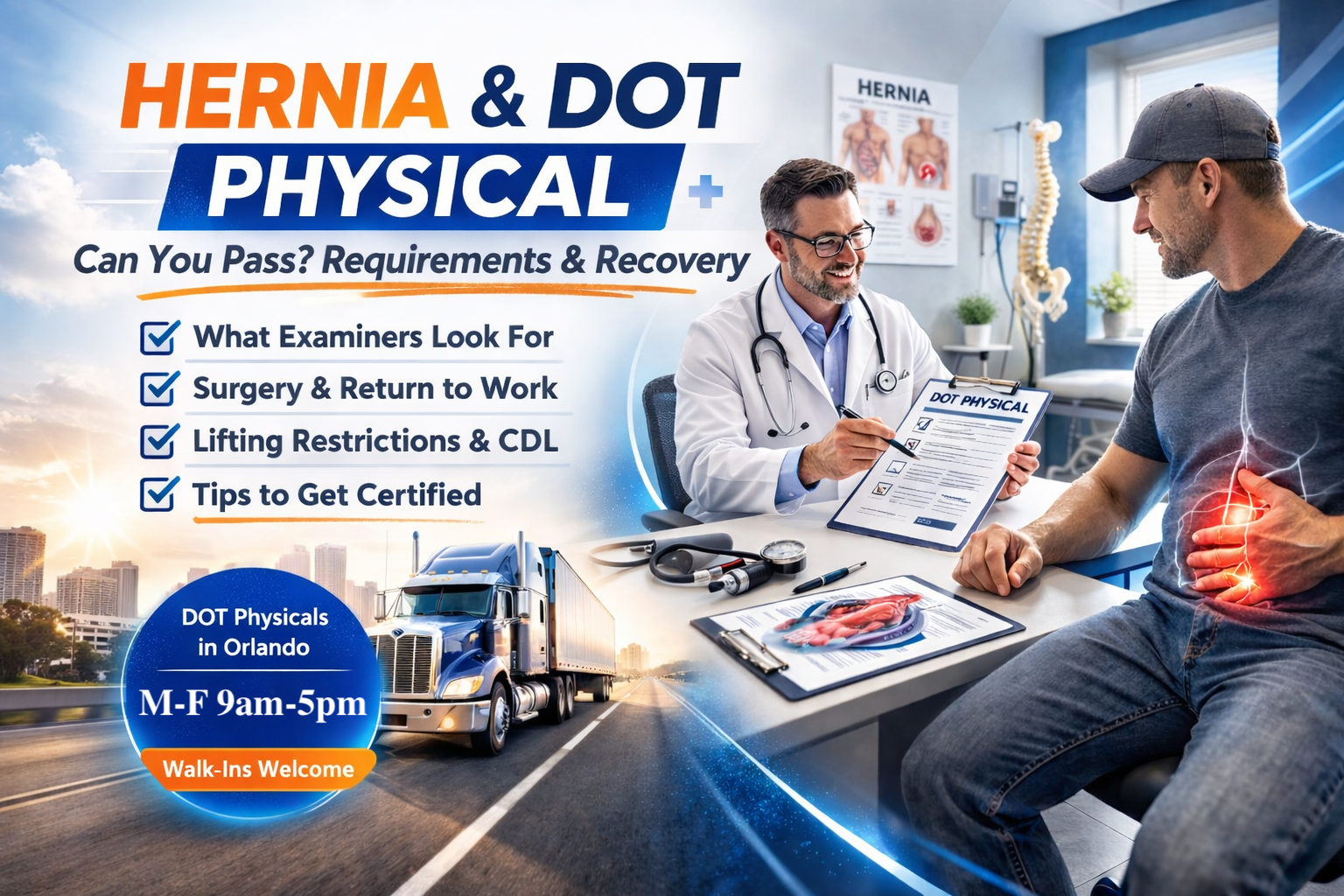
What is a hernia (and why it matters for CDL drivers)?
A hernia happens when tissue pushes through a weak spot in the muscle wall — often in the abdomen or groin. Common types drivers ask about include:
- Inguinal hernia (groin)
- Umbilical hernia (belly button area)
- Ventral/incisional hernia (abdominal wall, often after surgery)
Hernias matter in a DOT physical because they can cause pain, limit movement, and in rare cases lead to urgent complications (like incarceration/strangulation) that may require emergency care.
Can you pass a DOT physical with a hernia?
Often yes. Many drivers pass their DOT physical with a hernia if:
- The hernia is reducible or stable (not worsening rapidly)
- You are not having severe pain, vomiting, fainting, or major symptoms
- You can safely perform essential job tasks (climbing, turning, braking, coupling, basic lifting)
- There is no sign of an emergency complication
What DOT medical examiners typically look for
During the exam, the medical examiner is generally assessing:
Symptoms and function
Pain level, movement limitations, difficulty walking/standing, and whether you can do normal work tasks safely.
Risk of sudden complications
Whether the hernia appears unstable or at risk for urgent issues that could affect driving safety.
When a hernia becomes a DOT problem
A hernia is more likely to delay or limit certification if any of the following are present:
- Severe or worsening pain that could distract from safe driving
- Functional limitations (can’t climb, bend, twist, or safely operate vehicle controls)
- Active lifting restrictions from a treating provider that conflict with job requirements
- Recent ER visits or suspected complications
- Recent surgery without clearance documentation
Do you need hernia surgery to pass a DOT physical?
Not always. Some hernias can be monitored, and many drivers continue to work while planning treatment. However, if your clinician recommends surgery due to symptoms or risk, it’s smart to take that guidance seriously.
If you recently had hernia surgery, the key is showing you are stable, healed, and safe to perform required duties.
Hernia surgery and returning to work (what to bring)
Recovery and return-to-work timing depends on your procedure and your surgeon’s plan. For a DOT physical after surgery, bring:
- A surgeon/clinician clearance note (return-to-work statement)
- Any current restrictions (especially lifting restrictions)
- Medication list (especially pain meds and how they affect you)
- If applicable, follow-up appointment notes indicating stable recovery
Will a hernia belt help you pass?
Some drivers wear a hernia belt/truss for comfort. It may help reduce discomfort during work, but it does not replace evaluation or treatment. If you use one, let the examiner know and be ready to discuss symptoms and stability.
FAQ
Can I pass a DOT physical with a hernia?
Often yes. Many drivers are certified if the hernia is stable and not causing symptoms or limitations that create a safety risk.
Does a hernia automatically disqualify a CDL driver?
No. Certification depends on severity, symptoms, functional ability, and whether there is concern for sudden complications.
Can I work after hernia surgery and pass a DOT physical?
Many drivers return after surgery once cleared by their surgeon and stable without limiting restrictions. Bring a clearance note if you recently had surgery.
Do lifting restrictions affect DOT certification?
They can. If restrictions prevent safe performance of essential job duties, an examiner may delay certification until you’re cleared.
Should I tell the examiner about my hernia even if it doesn’t hurt?
Yes. Accurate history helps the examiner document appropriately and advise you on what to monitor and what paperwork may be needed.
Need a DOT physical in Orlando?
HealthRoute provides walk-in DOT physicals in Orlando. If you have a hernia or recently had surgery, bring any relevant notes and your medication list so we can keep the visit smooth and efficient.
Call: 407-859-1880 • Location: 4985 Hoffner Ave, Suite 1, Orlando, FL 32812