Complete DOT Physical Guide for First-Time CDL Drivers
Getting your first DOT physical can feel stressful—especially if you don’t know what to expect. This guide breaks down the exam step-by-step, including vision, hearing, urinalysis, vitals, how long it takes, and whether a walk-in or appointment is best.
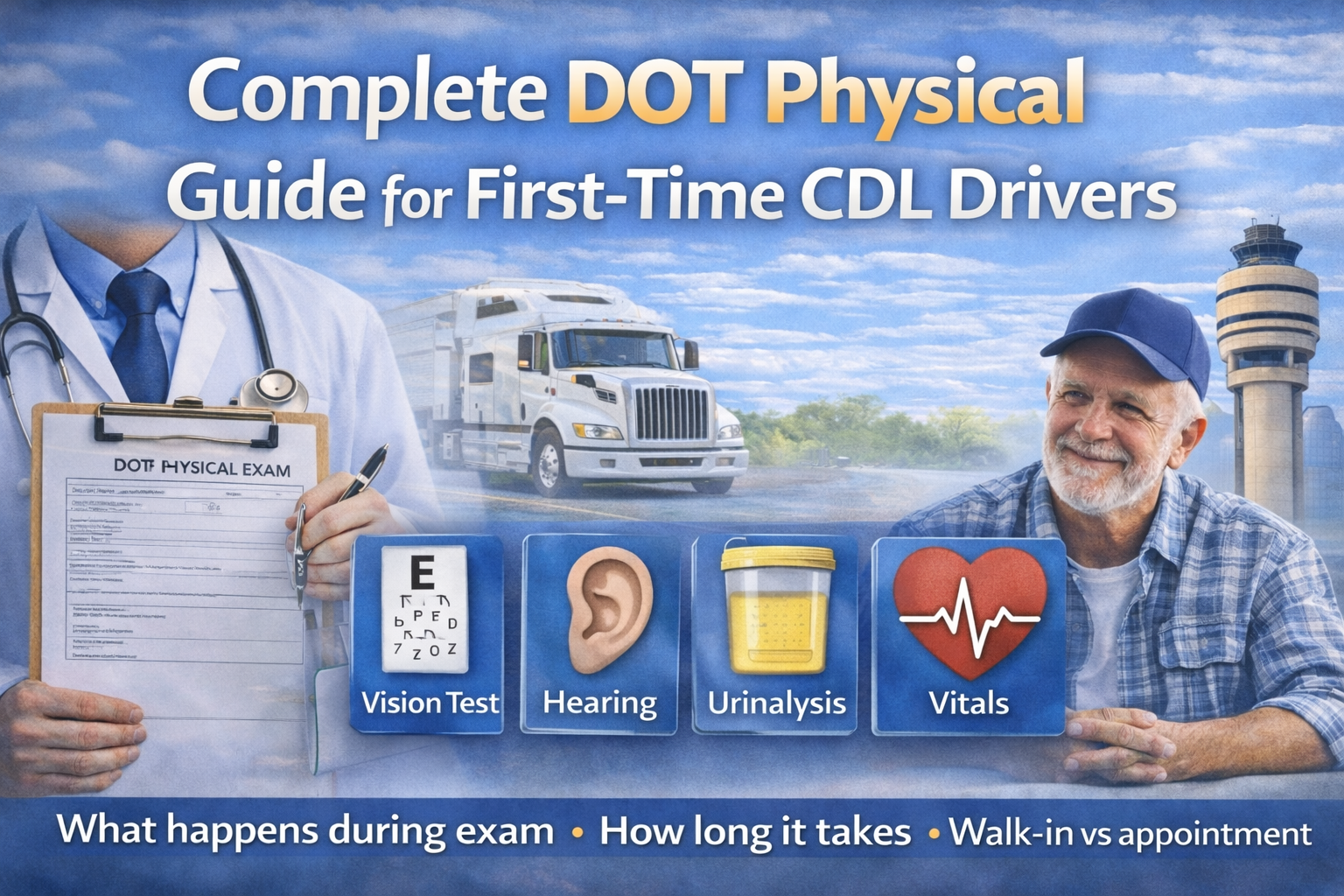
What is a DOT physical?
A DOT physical (also called a DOT medical exam) is required for many commercial drivers to make sure you can safely operate a commercial motor vehicle. The exam checks for medical conditions that could increase the risk of sudden incapacitation or unsafe driving.
What to bring to your DOT physical (first-time checklist)
- Valid ID (driver’s license)
- Glasses or contacts (if you wear them)
- Medication list (name + dose + how often you take it)
- Medical history info (surgeries, diagnoses, specialists)
- Documentation for common conditions (if applicable):
- CPAP compliance report for sleep apnea
- Cardiology clearance for heart conditions (AFib, stents, etc.)
- Recent A1C or diabetes management notes
What happens during the DOT physical (step-by-step)
Here’s the typical flow
- Paperwork & medical history (conditions, surgeries, meds, symptoms)
- Vitals (blood pressure, pulse, height/weight)
- Vision test
- Hearing test
- Urinalysis (urine screening)
- Physical exam with the medical examiner
- Certification decision (card length + any follow-up requirements)
Vision test: what they check
Vision is tested to make sure you can safely see road hazards, signs, and signals. If you wear corrective lenses, bring them—your medical card may require you to wear them while driving.
- Distance vision (each eye and both eyes)
- Peripheral vision (field of vision)
- Color recognition (ability to recognize traffic signal colors)
Hearing test: what they check
Hearing is evaluated to ensure you can hear important sounds (sirens, horns, warnings). The examiner may use a “forced whisper” test or other screening methods.
Urinalysis: what it is (and what it is not)
The DOT physical includes a urine test (urinalysis). This is mainly used as a health screening—commonly checking:
- Sugar (can be a sign of diabetes issues)
- Protein (can suggest kidney concerns)
- Blood in the urine
- Hydration / specific gravity
Vitals: blood pressure and pulse matter
Blood pressure is one of the most common reasons drivers receive a shorter medical card. If your blood pressure is elevated on exam day, the examiner may require follow-up, monitoring, or a shorter certification period.
If you’re worried about blood pressure, avoid energy drinks and heavy caffeine right before your appointment, and arrive early so you can sit and relax before vitals are taken.
The physical exam: what they look at
The examiner checks systems that affect safe driving and the risk of sudden issues on the road. This typically includes:
- Heart and lungs
- Neurological function (balance, coordination, reflexes)
- Musculoskeletal function (ability to climb, grip, move safely)
- General health indicators (swelling, breathing effort, etc.)
How long does a DOT physical take?
Most DOT physicals take about 30–45 minutes depending on how busy the clinic is and whether paperwork is complete. If you arrive with your documents ready and your medication list, it typically goes faster.
Fastest visits
Drivers with paperwork ready + no missing documents often finish in under an hour.
Longer visits
Missing specialist notes, unclear meds, or follow-up questions can extend the process.
Walk-in vs appointment: which is better?
Both options can work—here’s how most drivers choose:
Walk-in is great if:
- You need it ASAP and have flexibility
- You can come earlier in the day
- Your paperwork is ready to go
Appointment is great if:
- You’re on a tight schedule and want a planned time
- You have a complex medical history and want extra time
- You’re coordinating for multiple drivers (employers)
What card length will you get?
DOT medical cards can be issued for different lengths depending on your health and monitoring needs. Many drivers qualify for a longer card when conditions are stable and documentation is complete.
Related read: Why You Got a 3-Month, 1-Year, or 2-Year DOT Medical Card
Need a DOT physical in Orlando?
HealthRoute provides DOT physical exams for CDL drivers and helps you understand what to bring so you can avoid delays.
DOT Physicals • Book / Walk-In Info • Call 407-859-1880