DOT Physicals & Blood Pressure: How Caffeine Can Affect Your Results
Coffee, energy drinks, pre-workout, and sodas are part of many drivers’ routines—but one caffeinated drink before a DOT exam can spike blood pressure enough to risk a short-term medical card.
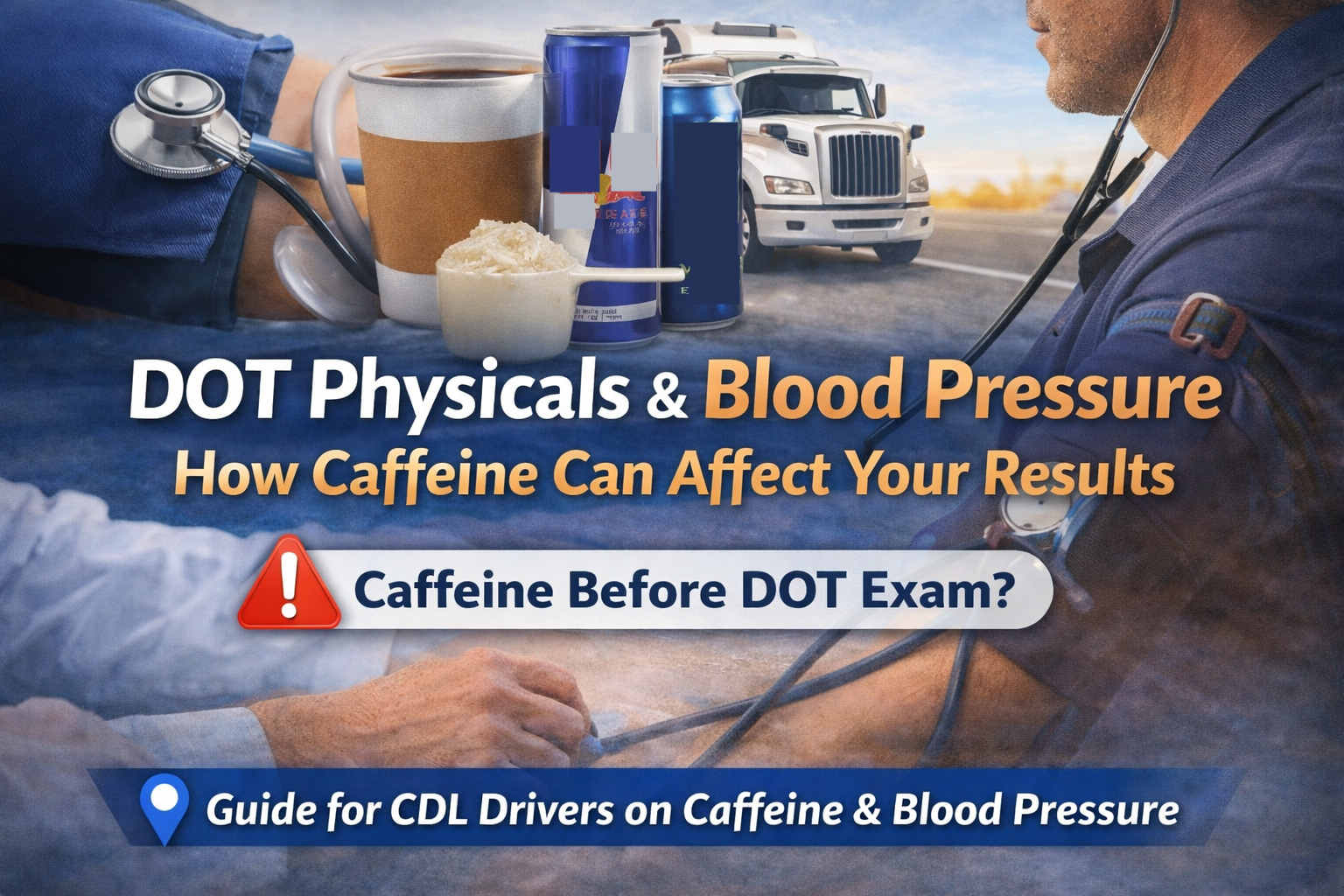
For many CDL drivers, passing the DOT physical means keeping blood pressure within the medical examiner’s guidelines. One of the most common reasons we see an elevated reading at HealthRoute is surprisingly simple: caffeine.
Whether it’s a morning coffee, an energy drink on the way in, or a scoop of pre-workout after a night run, caffeine before your DOT physical can raise blood pressure temporarily—sometimes enough to change the outcome of your exam.
Why does caffeine raise blood pressure?
Caffeine is a stimulant. When you drink it, it can trigger the release of adrenaline (epinephrine), which may cause:
- Blood vessels to temporarily tighten
- Heart rate to increase
- Stress hormones to rise
This combination can elevate blood pressure by 5–20 points or more, depending on the person. For drivers who already have borderline high blood pressure, a caffeinated drink can make the reading look worse than it truly is.
How much caffeine is in coffee vs. energy drinks?
Different drinks contain very different amounts of caffeine. Here are typical averages:
| Drink | Serving Size | Approx. Caffeine |
|---|---|---|
| Black coffee | 8 oz | 80–120 mg |
| Espresso shot | 1 oz | 60–75 mg |
| Red Bull | 8.4 oz | ~80 mg |
| Monster Energy | 16 oz | ~160 mg |
| Bang / Reign / C4 | 16 oz | ~300 mg |
| Pre-workout powders | 1 scoop | 150–350 mg (varies) |
| Sodas (Coke/Pepsi) | 12 oz | 35–55 mg |
If your exam is in the morning, it’s easy to accidentally stack caffeine (coffee + soda + energy drink), which can increase the chance of a higher reading.
How long does caffeine affect blood pressure?
Caffeine typically reaches peak levels in your bloodstream about 30–60 minutes after you drink it. Many people feel the strongest blood pressure impact around 45 minutes.
But caffeine doesn’t disappear quickly. The half-life (how long your body takes to remove half of it) is about 5–6 hours for most adults.
Practical tips to help your blood pressure read accurately
- Skip caffeine before your exam (coffee, energy drinks, pre-workout, sodas)
- Arrive early and sit quietly for a few minutes
- Hydrate and avoid rushing in stressed
- Avoid nicotine right before (if applicable)
- Bring your medication list and take prescriptions as directed (unless your clinician told you otherwise)
Bottom line
Caffeine is one of the most common and easily preventable reasons drivers struggle with blood pressure during a DOT physical. By understanding how long caffeine lasts—and how much is really in your drink—you can reduce unnecessary stress, avoid retests, and lower the risk of a short-term medical card due to a temporary spike.
If you have questions before your exam, call HealthRoute at 407-859-1880.