Diabetes & DOT Physical Requirements (A1C, Insulin, Certification)
Many CDL drivers can pass a DOT physical with diabetes — even if they take medication. What matters most is stable control, safe driving, and having the right documentation ready. Here’s how diabetes is reviewed during a DOT exam and what can affect your medical card length.
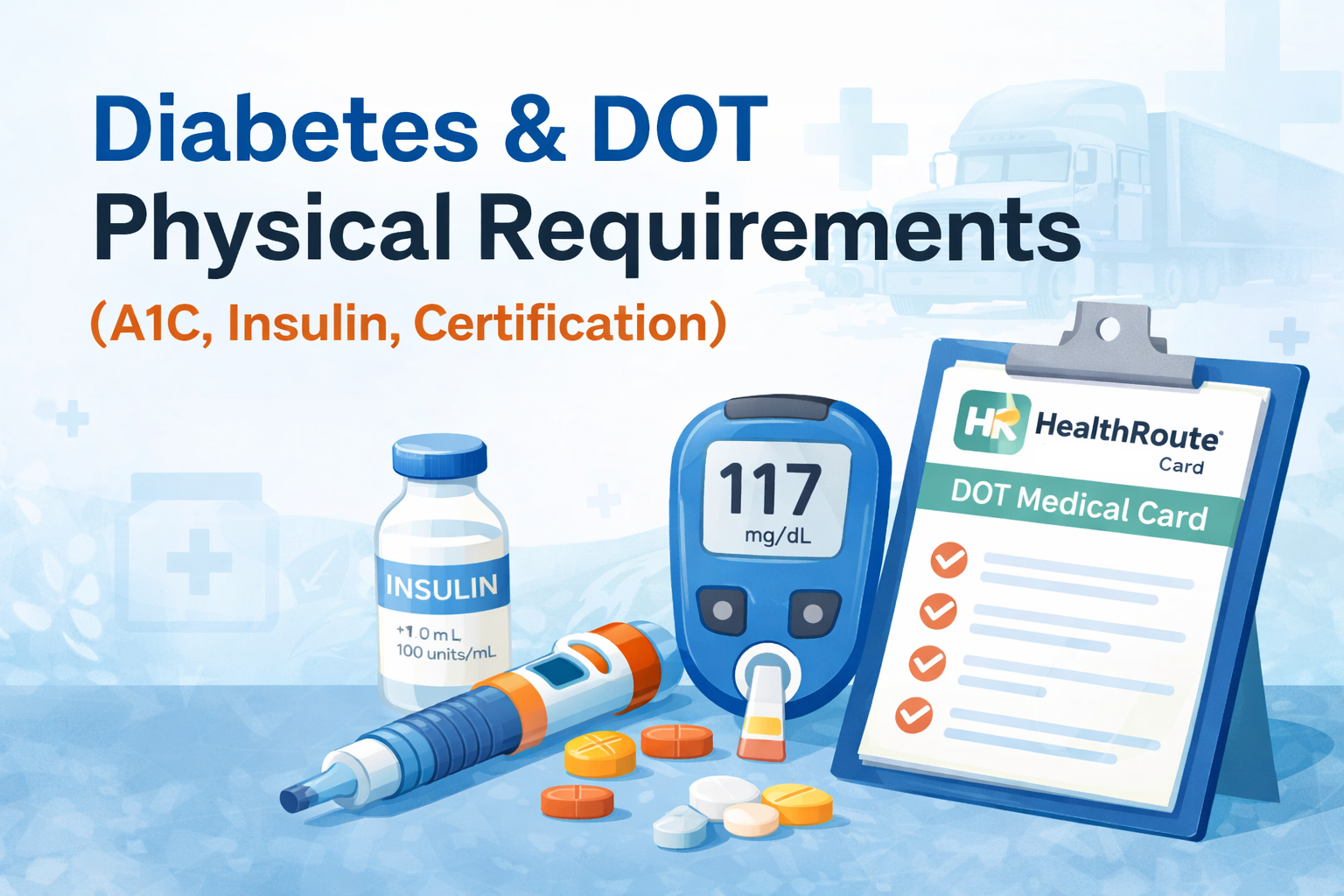
Can you pass a DOT physical with diabetes?
Yes — many drivers with Type 1 or Type 2 diabetes can be medically certified. The medical examiner is looking for one main thing: can you safely operate a commercial vehicle without a risk of sudden impairment.
What helps you get certified
Stable blood sugar control, taking medication as prescribed, regular follow-ups with your provider, and no recent severe low blood sugar episodes.
What may delay certification
Missing documentation, unclear medication history, symptoms of low blood sugar while driving, or concerns about complications that affect safe driving.
Does the DOT require a specific A1C?
A DOT exam does not use a single “pass/fail” A1C number for every driver. However, an A1C can be a helpful snapshot of your average blood sugar control. If you have a recent A1C result, it’s smart to bring it.
- A complete medication list (name, dose, how often)
- Optional but helpful: recent A1C lab result
- Optional: recent blood sugar logs (if you track)
- Any diabetes-related specialist notes if you’re being followed
What if sugar shows up in your urine test?
Glucose in urine can happen with diabetes or with high blood sugar. If the urinalysis shows glucose, the examiner may ask about your diagnosis, medications, and recent control. In some cases, certification may be issued as pending until you provide additional information.
Related: Sugar in urine during a DOT physical: what happens next
Insulin-treated drivers: what’s different?
Drivers who use insulin can still be qualified, but insulin raises an important safety question: is there a risk of severe low blood sugar (hypoglycemia) that could impair driving?
If you use insulin, the examiner may request additional documentation from your treating clinician to confirm stable management and safe driving. Bringing your current treatment information can help avoid delays.
How long is the DOT medical card for drivers with diabetes?
Medical card length is based on the examiner’s clinical judgment, FMCSA recommendations and your overall risk profile. Many drivers with well-managed diabetes are certified for 1 year, but may receive a shorter certification if follow-up is needed.
You may get a shorter card if:
- Your diabetes plan is new or recently changed
- There are concerns about low blood sugar events or high A1c
- Additional monitoring is recommended
- Complications need follow-up documentation
You may qualify for longer certification if:
- Your diabetes is stable and well-documented
- You have consistent care and follow-up
- No severe hypoglycemia episodes are reported
- No complications affecting safe driving are present
Related: Why you got a 3-month, 1-year, or 2-year DOT medical card
Diabetes complications that can affect DOT certification
The DOT physical is not just about blood sugar numbers — it’s about safety and functional ability. Complications that affect safe driving can require additional review or documentation.
- Vision changes (especially diabetic eye disease)
- Nerve symptoms in hands/feet that affect pedals or steering control
- Kidney disease (may require monitoring)
- Heart disease risk (diabetes increases cardiovascular risk)
FAQ
Do I need to fast before a DOT physical if I have diabetes?
Usually, no. Eat normally unless your personal doctor gave you specific instructions. Avoid arriving with very low blood sugar — bring a snack or glucose tablets just in case.
Will diabetes automatically disqualify me?
No. Many drivers are certified with diabetes. The key concerns are safe control and the risk of sudden impairment (especially severe hypoglycemia).
What’s the most common reason diabetes-related exams get delayed?
Missing documentation (med list, recent A1C or provider notes when needed), or unclear history about low blood sugar episodes.
Is the urine test during a DOT physical a diabetes test?
It’s a medical screen that checks glucose and protein, among other things. It can flag possible high blood sugar, but it’s not the same as an A1C or a formal diabetes diagnosis test.
Need a DOT physical in Orlando?
HealthRoute provides walk-in DOT physicals in Orlando. Most exams take about 30–45 minutes depending on paperwork and medical history. If you have diabetes, bring your medication list and any recent lab results you have — it helps your visit go faster.
Call: 407-859-1880 • Location: 4985 Hoffner Ave, Suite 1, Orlando, FL 32812