Clear Guidance for Medical Conditions
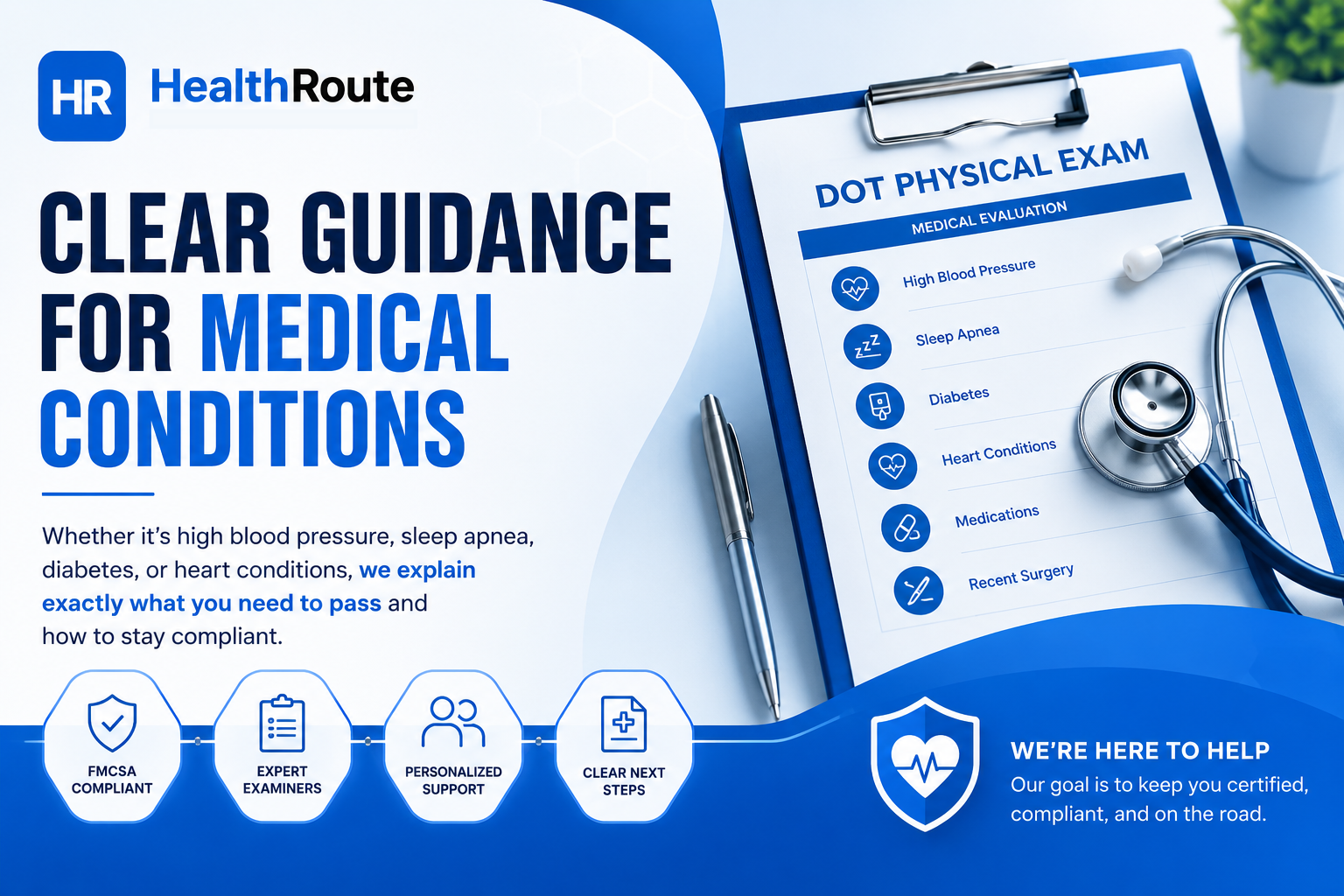
Whether it is high blood pressure, sleep apnea, diabetes, heart conditions, medications, or another medical concern, HealthRoute helps CDL drivers understand what may be needed to complete their DOT physical and stay compliant.
🎧 Listen to the Audio Summary
We are here to help CDL drivers understand the process
A DOT physical can feel stressful when you have a medical condition. Drivers often worry that high blood pressure, sleep apnea, diabetes, heart problems, medications, or a recent surgery will automatically disqualify them.
At HealthRoute, our goal is to explain the process clearly. If something shows up during your DOT physical, we will let you know what it means, what paperwork may be needed, and what steps may help you complete the certification process.
We explain the concern
We help you understand why a condition, medication, or test result may need additional review.
We identify the paperwork
If records, compliance data, or a medical clearance letter are needed, we explain what to request.
We follow FMCSA standards
DOT physicals are performed using FMCSA medical qualification standards and examiner judgment.
We help you avoid delays
Coming prepared can reduce return visits and help the examiner make a certification decision.
Common medical conditions that may need review
Many CDL drivers have medical conditions and still qualify for a DOT medical card. The examiner’s job is to determine whether the condition is stable, properly treated, and unlikely to interfere with safe operation of a commercial motor vehicle.
High blood pressure
Elevated blood pressure may affect the length of certification or require follow-up if readings are too high.
Sleep apnea
Drivers using CPAP should bring a current compliance report so the examiner can review usage.
Diabetes
Drivers may need recent A1C information, medication details, and documentation showing the condition is monitored.
Heart conditions
Cardiology notes, stress test results, procedure history, or clearance may be requested depending on the condition.
Medications
Some medications require closer review if they may cause sedation, dizziness, impairment, or safety concerns.
Recent surgery or injury
A return-to-work or treating provider clearance may be needed after surgery, hospitalization, or injury.
What happens if something shows up during your physical?
If a medical concern appears during the DOT physical, it does not always mean you failed. It may mean the certified medical examiner needs additional information before making a final decision.
We evaluate the finding
The examiner reviews your medical history, medications, vital signs, exam findings, and any documents you brought.
We explain what it means
If a condition requires more information, we explain why the examiner needs additional documentation.
We tell you what paperwork may help
You may need a medical clearance letter, CPAP compliance report, medication safety note, specialist records, or return-to-work documentation.
You follow up with your provider if needed
Your treating doctor or specialist may need to confirm that your condition is stable, monitored, and safe for driving.
The examiner makes the final decision
The DOT medical examiner reviews the information and determines whether you meet FMCSA medical qualification standards.
Helpful condition-by-condition guidance
| Condition | What may be needed | How to prepare |
|---|---|---|
| High blood pressure | Repeat readings, medication list, or primary care follow-up if readings are elevated. | Take medications as prescribed, avoid rushing, and give yourself time before the exam. |
| Sleep apnea | CPAP compliance report showing use and treatment effectiveness. | Bring your current CPAP report to the appointment. |
| Diabetes | Medication list, recent A1C, treating provider notes, or insulin documentation when applicable. | Bring recent lab results and provider notes if available. |
| Heart condition | Cardiology clearance, stress test, echocardiogram, procedure records, or follow-up notes. | Bring cardiology records if you have a history of heart attack, stent, bypass, chest pain, or arrhythmia. |
| Medications | Medication safety letter from the prescribing provider if a medication may affect driving. | Bring a complete medication list with dosage and reason for use. |
| Recent surgery or injury | Return-to-work clearance or treating provider statement. | Bring discharge paperwork, follow-up notes, and work-status documentation. |
Helpful HealthRoute forms and paperwork
HealthRoute provides helpful forms and documents to make it easier for drivers and treating providers to understand what information may be needed. These forms can help reduce confusion when a medical condition requires additional review.
Medical Clearance Request Form
Helpful when the examiner needs your treating provider to comment on stability, treatment, restrictions, or driving safety.
Medication List Form
Drivers can list medication names, dosages, prescribing providers, and reasons for taking each medication.
CPAP / Sleep Apnea Documentation
Useful for drivers who need to bring CPAP compliance information or sleep specialist documentation.
Return-to-Work Clearance
Helpful after surgery, injury, hospitalization, or a medical event when work status needs to be clarified.
FMCSA references and resources
DOT physicals are based on FMCSA medical qualification rules and guidance. The certified medical examiner uses the driver’s history, exam findings, documentation, and FMCSA standards to make the certification decision.
- FMCSA: Medical Examination Report Form, MCSA-5875
- FMCSA: Medical Examiner’s Certificate, MCSA-5876
- FMCSA: Medical Examiner’s Handbook 2024 Edition
- 49 CFR Part 391 Subpart E: Physical Qualifications and Examinations
- FMCSA National Registry of Certified Medical Examiners
Why you should not wait until the last minute
If you have a medical condition, waiting until the day your DOT medical card expires can create problems. Some conditions require updated records, CPAP data, specialist notes, lab work, or a treating provider clearance.
Getting your DOT physical early gives you time to gather paperwork if something comes up. HealthRoute also sends reminders before your DOT medical card expires to help drivers stay ahead of renewal deadlines.
Frequently asked questions
Does having a medical condition mean I cannot pass my DOT physical?
No. Many drivers with medical conditions still qualify. The examiner must determine whether the condition is stable, treated, monitored, and safe for commercial driving under FMCSA standards.
What if something shows up during my DOT physical?
The examiner may ask for additional documentation before making a final certification decision. HealthRoute will explain what information may be needed and what steps to take next.
Should I bring medical records to my DOT physical?
Yes, especially if you have sleep apnea, diabetes, heart disease, seizure history, recent surgery, or take medications that may affect driving.
Can my treating doctor decide if I pass?
Your treating doctor can provide helpful records or clearance information, but the certified medical examiner makes the final DOT certification decision.
Where can I find HealthRoute forms?
You can visit the HealthRoute forms and documents page for helpful paperwork related to DOT physicals and medical documentation.
Need help before your DOT physical?
If you have high blood pressure, sleep apnea, diabetes, a heart condition, recent surgery, medication questions, or another medical concern, HealthRoute is here to help you understand what may be needed before your visit.
Call: 407-859-1880 • Location: 4985 Hoffner Ave, Suite 1, Orlando, FL 32812