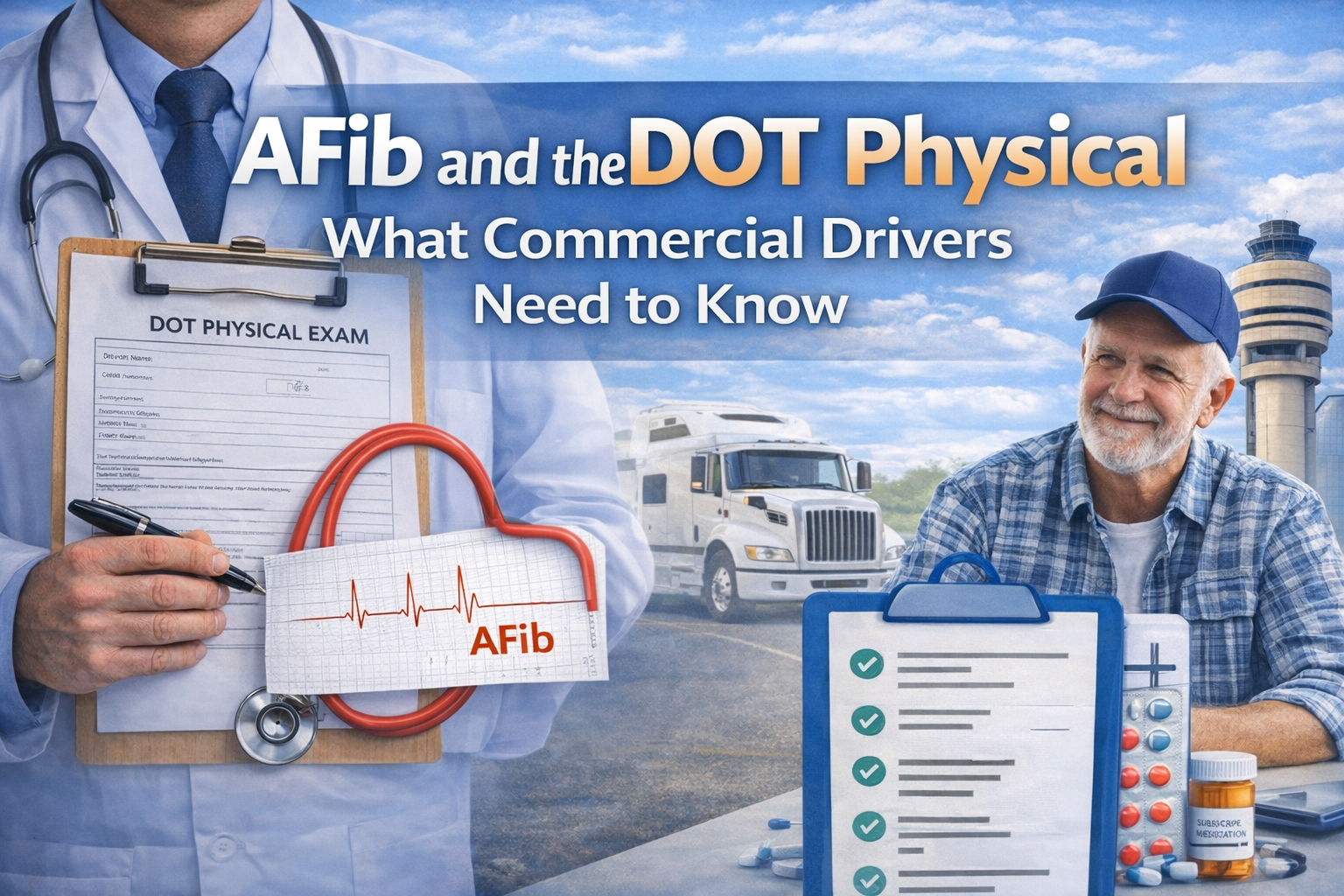
AFib and the DOT Physical: What Commercial Drivers Need to Know
Atrial fibrillation (AFib) does not automatically disqualify you from a DOT medical card. The key is showing the condition is stable, your heart rate is controlled, and you have the right cardiology documentation—so you can avoid delays and get certified confidently.
What is AFib (and why it matters for DOT drivers)?
Atrial fibrillation (AFib) is an irregular heart rhythm that can cause the heart to beat too fast, too slow, or inconsistently. Some drivers feel obvious symptoms (palpitations, shortness of breath, fatigue), while others have no symptoms and only find out during a physical exam.
For DOT certification, the main concern is risk of sudden incapacitation—for example, fainting, dizziness, poor control of heart rate, or complications related to stroke risk. That’s why examiners focus on whether your AFib is stable and well-managed.
Can you pass a DOT physical with AFib?
In many cases, yes. Drivers with AFib are often certified when:
- Symptoms are stable (or you have no symptoms)
- Heart rate is controlled with treatment
- You are following a cardiologist’s plan
- There have been no recent episodes of fainting, near-fainting, severe dizziness, or uncontrolled rapid heartbeat
- Your provider documents you are safe to operate a commercial motor vehicle
What the medical examiner is looking for
During a DOT physical, the examiner is typically evaluating three big things:
- Stability: Is your AFib stable over time or recently changing?
- Control: Is your heart rate controlled (and are you tolerating your medications)?
- Safety risk: Any history of fainting, dangerous symptoms, stroke/TIA, or complications?
If you’ve had recent hospital visits, medication changes, new symptoms, or a new diagnosis, the examiner may request additional records before issuing a card.
AFib paperwork checklist (bring this to your DOT exam)
Bring these documents if you have a history of AFib
- Recent cardiology visit note (often within the last 12 months)
- Clearance letter stating you are stable and safe to operate a commercial vehicle
- Medication list (include dose and how often you take it)
- Test results if you have them (EKG, echo, Holter/event monitor summary, stress test if done)
Blood thinners (anticoagulants) and DOT certification
Many AFib patients take anticoagulants (“blood thinners”) to reduce stroke risk. Being on a blood thinner does not automatically disqualify you, but it does increase what an examiner needs to see: that you are taking it as prescribed, tolerating it, and being monitored appropriately.
If you have a history of bleeding problems, frequent falls, recent surgery, or a recent stroke/TIA, expect the examiner to request more documentation.
Common AFib treatments drivers ask about
Rate control vs rhythm control
Some drivers stay in AFib but keep the heart rate controlled (rate control). Others use meds or procedures to restore normal rhythm (rhythm control). Either approach can be compatible with certification if you are stable and cleared by your cardiologist.
Cardioversion or ablation
After a cardioversion or ablation, there may be a recovery/observation window and follow-up testing. If your procedure was recent, bring the operative note, follow-up plan, and a clearance statement.
What can cause a “shorter card” with AFib?
Even when a driver is eligible, some certifications are issued for a shorter interval to ensure close follow-up. Things that commonly lead to that include:
- Recent new diagnosis or medication changes
- Recent ER visit or hospitalization for AFib symptoms
- Uncertain control of heart rate
- Missing cardiology documentation or unclear follow-up plan
- History of fainting, near-fainting, or dangerous symptoms
Red flags that may require more evaluation
If any of these apply, expect the examiner to request additional records (or require stabilization before certification):
- Recent syncope (passing out) or near-syncope
- Uncontrolled rapid heart rate or severe symptoms while driving
- Recent stroke or TIA
- Chest pain with exertion, severe shortness of breath, or signs of heart failure
- Not taking prescribed medications or no cardiology follow-up
How to avoid delays on exam day
- Schedule your cardiology follow-up before your DOT card expires.
- Request a clearance letter that clearly states stability and fitness to drive.
- Bring your medication list (including blood thinners) and any key test summaries.
- Be honest about symptoms—especially dizziness, fainting, or new episodes.
Need a DOT physical in Orlando?
HealthRoute provides DOT physical exams with medical cards and can help drivers understand what paperwork to bring, especially for common conditions like AFib, high blood pressure, sleep apnea, and diabetes.
Learn more here: DOT Physicals • Book / Walk-In Info • Call 407-859-1880